

Last updated on 13 January 2026 by Brisbane Livewell Clinic Editorial Team
This week in Part Two we’ll look at Gluten-Free solutions including general guidelines around gluten avoidance and Naturopathic treatment offered to support the reversal of symptoms. Removing gluten can be challenging but the good news is starting a gluten-free diet (GFD) can be considered an opportunity to make better food choices.(1) Even better news for Coeliac Disease (CD) sufferers is that the complete recovery of mucosal damage to the gut wall as well as the reversibility of its progression occurs with total avoidance of gluten.(2) Making a long term commitment is important however, as this mucosal recovery can take 1-2 years but clinical improvement can occur within just a few weeks.(2)
Going Gluten-free
Knowing what to avoid is one thing, knowing all of the gluten-free options is another thing altogether. An extensive range of grains and legumes are utilised as flours including Amaranth, Arrowroot, Buckwheat, Chestnut, Corn, Garbanzo (Chickpea), Gram (Lentils), Millet, Potato, Quinoa, Rice, Sorghum, Soy, Tapioca and Teff. With a little experimentation and a few dedicated gluten-free recipe websites, you will be boasting about your new GF baking skills in no time. Of course, it is great to be hands-on with cooking rather than relying on store-bought goods but as you overhaul your diet and start to rely on new brands for pantry essentials and kitchen staples, let’s take a look at some of the challenges that can arise.
Getting the Diet right
Gluten Intolerance Problem: Trace amounts of gluten can still cause an autoimmune response in CD and can be revealed by a blood test showing increased serum levels of anti-transglutaminase IgA antibodies.(1) In Non-Coeliac Gluten Sensitivity (NCGS) and Wheat Allergy (WA), low levels of exposure can also be problematic.
Solution: It’s important to ensure that there are no hidden sources of exposure. Always check food labels for allergens (with GLUTEN or WHEAT written in bold) and expect to find them in a range of foods that may otherwise appear gluten or wheat-free. Wheat can be used as a binding agent and is often added to cold cut meats, desserts, ice cream, and cream, while wheat starch is used for coating pills, pralines and roasted coffee grains.(3) Also look out for products like baked beans, Vegemite, textured vegetable protein (TVP) and beer.
Gluten Intolerance Problem: Going gluten-free means a big change socially
Solution: Some patients on a GFD report spending more time, money and energy on food and food preparation and eating more meals at home instead of dining out but they also report feeling accepted, empowered and relieved.(4) Being upfront, clear and confident about your needs to friends, family and hospitality staff is important and with time will become second nature. Despite its challenges, if you take ownership of your health, the rest will follow.
Gluten Intolerance Problem: Many gluten-free products are junk food. Studies evaluating the nutritional composition of processed gluten-free products have demonstrated higher levels of lipids, trans fat, protein, and salt compared to their gluten-containing counterparts.(4)
Solution: Swapping a sweet biscuit for a GF equivalent just isn’t good nutrition! Look at the staple foods first, like GF pasta and noodles with basic and minimal ingredients. Bread can be a little trickier. Generally, we recommend finding a good quality bread from a health food store rather than poorer quality supermarket products with added sugar. Just because it says gluten-free doesn’t mean its good for you, so don’t be fooled!
Gluten Intolerance Problem: Other foods are causing gut symptoms
Solution: Further temporary diet elimination can be useful in the initial phase of diagnosis and treatment. Getting personalised advice may be helpful to avoid feeling too restricted but it’s worth considering the common problematic foods. For example, temporary avoidance of milk and dairy products is highly recommended, since patients with CD may have accompanying brush border lactase deficiency secondary to damage to surface epithelial cells.(2) Maize (corn) may also affect a subgroup of coeliac patients and so in some cases, a maize-free diet is also advised.(1) In the case of NCGS and Wheat Allergy, a further restriction may be recommended on a case by case basis. Beyond the gut, a Wheat Allergy may also increase the chance of environmental allergens like grass, pollen or dust mite as triggers causing symptoms.
A note about Oats
1 in 5 people with CD reacts to oats. In this minority of patients with CD, avenin (a protein that is under the umbrella term ‘gluten’) found in oats has also been shown to elicit an immune reaction.(4) Coeliac Australia advises CD suffers to have a biopsy test conducted to ensure there is no reaction before allowing oats to be consumed.(5) Since damage can occur in the absence of symptoms, this is the safest approach. In NCGS and WA uncontaminated oats (oats not processed in wheat silos) may be sufficient in most cases.
Getting your Health back on track
Problem: Leaky gut and other health issues have occurred as a result of damage by gluten ingestion prior to diagnosis
Solution: Seek treatment with a Naturopath or Nutritionist. Troubleshooting via a diet and symptom diary, discussing time frames for total resolution and natural gut and immune treatment supplements can greatly assist, speeding up recovery and supporting the healing process.
Naturopathic support beyond the diet
As always, a naturopathic approach is a comprehensive approach. Based on individuals’ needs, we may suggest the following solutions in the short term:
- Digestive support, for example, digestive enzymes
- Prebiotics and probiotics to restore the microbiome
- Gut healing agents to promote healing of the gut wall
- Immune support via herbs and nutrients, to reduce the immune response
- Address nutrient deficiencies, especially Iron Deficiency Anaemia
- Further testing if required such as IgG Food Intolerance testing
Recipe for Gluten-Free Living – Cassava Coconut Pancakes
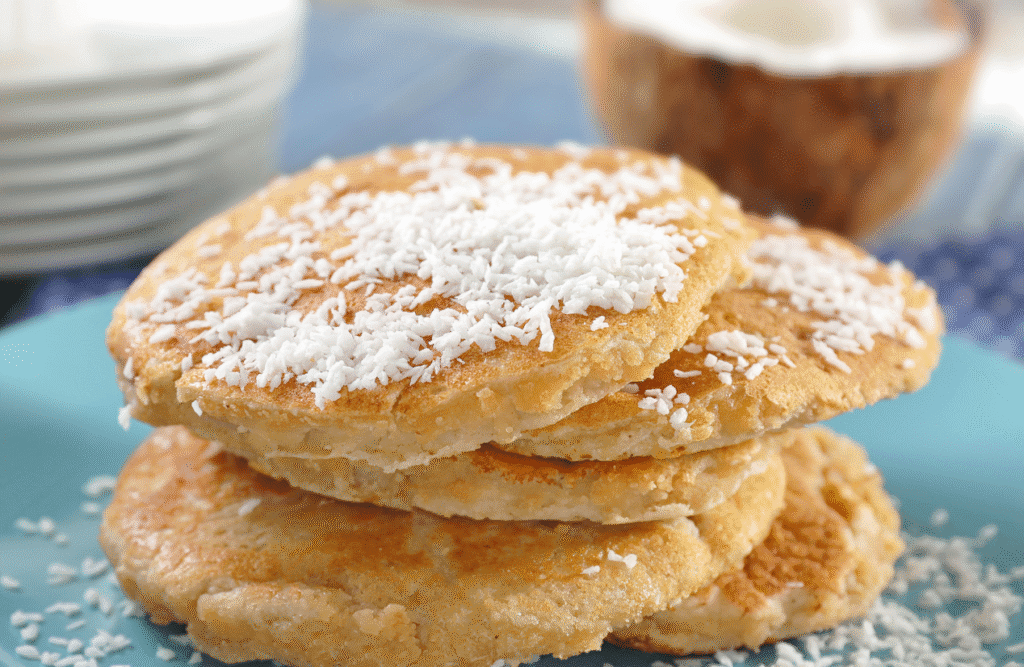
This nutritious cassava coconut pancakes is more than just a breakfast, it is a healthy option for people adopting a gluten-free lifestyle. This recipe is made with naturally gluten-free cassava flour and coconut that offers a gentle and easy to digest substitute for traditional wheat-based pancakes. These pancakes are a great option for anyone with gluten sensitivity, celiac disease, or just looking for a healthier, whole-food approach to regular meals.
Ingredients
- 237 ml Hot Water (divided)
- 9 grams Gelatin
- 240 ml Plain Coconut Milk (warm)
- 84 grams Coconut Flour
- 70 grams Cassava Flour
- 2 grams Sea Salt
- 30 ml Coconut Oil (divided)
Instructions
- Place half the boiling water in a large bowl and sprinkle the gelatin over top. Set aside for five minutes to dissolve, then whisk in the warm coconut milk.
- In a bowl, combine the coconut flour, cassava flour, and salt, then transfer it to the coconut-gelatin mixture. Stir together until well combined and there are no clumps. Add additional water as needed, until the mixture is easy to scoop and spread.
- Heat a bit of the oil in a large non-stick pan over low-medium heat. Scoop 1/4 cup of the batter into the pan and cook for three to four minutes per side. Transfer to a plate and repeat with the remaining oil and batter.
- Divide onto plates and add your desired toppings. Enjoy!
- Enjoy immediately for best results or refrigerate in an airtight container for up to three days.
One serving is two four-inch pancakes.
Add cinnamon and vanilla extract.
Top with honey, maple syrup, cottage cheese, or fresh fruit.
Going Gluten-Free? Go for it!
If gluten is the problem, living a gluten-free lifestyle is a big part of the solution. We are here to keep you motivated, educated and empowered to live your healthiest life. You’ve got this!
Want to learn more? These Blogs may also interest you. Click HERE or HERE or HERE